Clear Days and Gray Skies: The Truth About Air Quality in China That Nobody Back Home Is Telling You
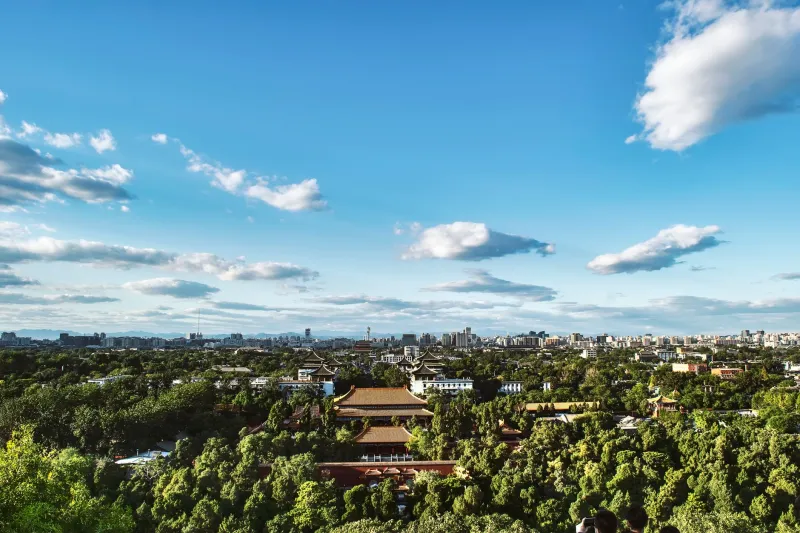
Before my first trip to Beijing, I packed four N95 masks like I was preparing for a disaster zone. A friend had forwarded me an article from 2015 with a photo of the skyline completely swallowed by brown haze. My mom sent a follow-up email asking if I'd considered a different destination. I landed, stepped outside the terminal, looked up, and saw a perfectly blue sky.
That's not to say the haze isn't real. It absolutely is — or was, depending on where you're going and when. But the gap between how air quality in China gets portrayed in American media and what travelers actually experience on the ground is wide enough to drive a freight train through. Let's close that gap.
The Map Matters More Than the Myth
China is enormous. Talking about "air quality in China" as a single condition is like saying "weather in the United States" — technically true, practically useless. The air in Kunming, a city in Yunnan Province known for its mild climate and outdoor culture, is dramatically different from the industrial corridors of Hebei. Chengdu sits in a basin that traps pollution more easily than coastal cities like Qingdao or Xiamen, where sea breezes do a lot of the heavy lifting.
Yunnan, Guizhou, and Hainan Island consistently rank among China's cleanest air provinces. Hainan in particular — often called China's Hawaii — posts air quality readings that would make Denver jealous on a good day. Meanwhile, northeastern cities like Harbin and Shenyang can struggle in winter when coal heating kicks in hard.
The point: your destination matters enormously. Researching air quality by city, not by country, is the only approach that makes sense.
Seasons Change Everything
Even within a single city, air quality swings dramatically by season. In Beijing, the shift is almost theatrical. Autumn — especially September and October — tends to bring some of the clearest skies of the year. Summer monsoon rains scrub the atmosphere clean. Spring carries the added challenge of Gobi Desert sandstorms that roll in from the northwest, turning the sky a surreal yellow-orange for a day or two before passing.
Winter is the toughest stretch across much of northern China. Heating systems — increasingly electric or gas, but still coal-reliant in some areas — run at full capacity, and temperature inversions trap pollutants close to the ground. If you're scheduling a trip to Xi'an or Tianjin and have flexibility, January probably isn't your month.
Southern cities follow a different rhythm. Guangzhou and Shenzhen generally maintain better air year-round, with summer being slightly worse due to vehicle emissions baking in the heat, and the cooler months offering more comfortable conditions overall.
What Chinese Residents Actually Do
Here's where the American perception really breaks down. The image of Chinese city-dwellers walking around perpetually masked, resigned to toxic air, is both outdated and reductive. Yes, masks are common — but the reasons are layered, and they've shifted considerably in the past decade.
For many people, especially in larger cities, mask-wearing during high-pollution days is simply practical habit, the same way someone in Phoenix grabs sunscreen before heading out. It's not panic — it's a routine response to a known variable. Apps like AQI China and IQAir are checked the way Americans check the weather app before leaving the house. If the AQI (Air Quality Index) is under 100, most locals don't think twice. Above 150, some put on a mask. Above 200, outdoor exercise gets reconsidered.
And then there's the COVID-era factor. Mask habits that developed between 2020 and 2023 normalized face coverings in ways that have partially persisted — though not universally, and not always because of pollution. Context matters.
Local parks still fill up with morning tai chi practitioners. Outdoor markets stay busy. Kids play outside. Life doesn't stop because the AQI ticked up.
The Progress Nobody Talks About
China's air quality crisis peaked roughly between 2010 and 2016. Since then, the improvement has been measurable and significant. Beijing's PM2.5 concentrations — the fine particulate matter most associated with health risks — dropped by more than 50 percent between 2013 and 2020, according to data from China's Ministry of Ecology and Environment. That's not spin; it's a documented trend that independent researchers have confirmed.
Coal plants have been shuttered or relocated outside city centers. Electric vehicle adoption has accelerated faster in China than almost anywhere else on earth. Natural gas heating has replaced coal furnaces in millions of urban homes. The blue-sky days in cities that once seemed like weather anomalies are now showing up far more frequently on the calendar.
This doesn't mean the problem is solved. Rural areas, some industrial zones, and parts of the northeast still face serious challenges. But the narrative of China as an irredeemably polluted country is simply behind the times.
Practical Decisions for Travelers
So what should you actually do? A few things that will serve you better than packing a gas mask:
Download an air quality app before you go. AQI China is free and reliable. IQAir also works well internationally. Check it the same way you'd check the forecast — it'll inform whether you want to do that long outdoor hike or save it for tomorrow.
Pack one or two quality masks, not a suitcase full. An N95 or KN95 is genuinely effective if the AQI climbs above 150 and you're planning extended outdoor time. You won't need it every day, but you'll be glad to have it on hand.
Plan outdoor activities around the forecast. Visiting the Great Wall? The Summer Palace? Zhangjiajie? Pick a clear day. Most of these experiences are dramatically better with visibility anyway, and the air quality apps make timing easy.
Adjust expectations based on your destination and season. A week in Guilin in October is going to feel nothing like a week in Harbin in January. Plan accordingly.
Don't let concern about air quality keep you from going. Millions of people live full, healthy lives in Chinese cities. A two-week trip, even in a city with moderate pollution, carries far less cumulative exposure than the fear-based framing suggests.
What I Actually Learned
By the end of that first Beijing trip, two of my four masks were still in their packaging. I used one on a day when the AQI pushed past 180 and I was walking around Hutong alleys for four hours. The other I used on a dusty day near the Ming Tombs that had nothing to do with industrial pollution.
What I remember more than the gray days is the clarity of the afternoon I stood on a ridge in the Fragrant Hills with a view that stretched clear to the horizon, the city laid out below me in crisp autumn light. Nobody around me was wearing a mask. Everyone was taking photos.
The full picture of air quality in China is complicated, regional, seasonal, and changing. That's worth understanding — not to dismiss the real health concerns that exist, but to replace a cartoon version of the story with one that actually helps you make smart decisions on the ground.