Still Eating Eggs Benedict in Shanghai? Here's How to Finally Travel China Like You Mean It
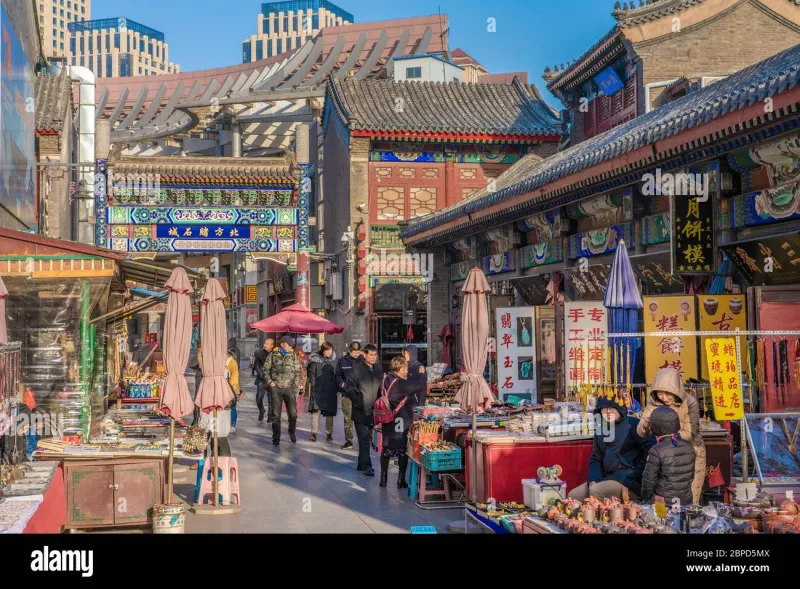
Photo: traveler exploring local Chinese neighborhood street market, via c8.alamy.com
Let's be honest for a second. You flew 14 hours, crossed the International Date Line, and landed in one of the most culturally rich countries on earth — and by day three, you're eating a Western-style breakfast at a hotel buffet while scrolling TripAdvisor for the "best English-friendly restaurants" nearby. No judgment. It happens to almost everyone. But there's a name for what's going on: the tourist bubble. And China, more than almost any other destination, has built an entire parallel infrastructure designed to keep you inside it.
The bubble isn't malicious. It's just convenient. English-language apps, foreigner-focused neighborhoods like Shanghai's Former French Concession or Beijing's Sanlitun strip, and polished group tours all exist because there's genuine demand for them. The problem is that when you only move through these channels, you end up experiencing a version of China that's been pre-digested for your comfort — and you go home thinking you understand a place you've barely touched.
How the Bubble Gets Built Around You
It starts before you even land. You book a tour through an international operator, download an English-language travel app, and join a Facebook group for expats in your destination city. By the time you arrive, your itinerary is basically set, your logistics are handled, and every interaction you're likely to have has been filtered through someone whose job is to make things easy for you.
Guided tours are the most obvious culprit, but they're not the only one. Foreigner-friendly neighborhoods in major Chinese cities are genuinely lovely places to spend time — they have great coffee shops, international restaurants, and bars where you can talk to people in English without any friction. But they're also kind of... not China? Or at least, they're a very particular slice of China that caters specifically to people who don't want to engage too deeply with the country around them.
Then there are the apps. Tools like Google Translate and a handful of English-first travel platforms are genuinely useful, but they also create a cushion between you and any real navigational challenge. When everything can be solved with a screenshot and a translation, you never have to ask a local for help. And asking locals for help, it turns out, is one of the fastest ways to have a real conversation.
What You Actually Miss When You Stay Comfortable
Here's what life looks like on the other side of the bubble. You're standing at a street food stall in Chengdu at 7 a.m., pointing at something you can't identify, and the vendor is laughing — not unkindly — while showing you the right way to eat it. You're on a local bus in Xi'an, watching a grandmother teach her grandson a card game while a man in a business suit dozes against the window. You're getting genuinely, productively lost in a neighborhood in Guangzhou that doesn't appear on any tourist map, and you stumble into a courtyard where a group of retirees is doing a slow, synchronized fan dance in the morning light.
None of that is on the itinerary. All of it is China.
The deeper issue is that staying in the bubble doesn't just limit your experiences — it actually distorts your understanding of the country. When every Chinese person you interact with is a tour guide, a hotel concierge, or a restaurant host trained to accommodate Western guests, you end up with a skewed sample. You miss the complexity, the humor, the frustration, and the warmth that exist in ordinary daily life.
Practical Ways to Pop It
Ditch the group tour for at least one full day. This sounds obvious, but a lot of travelers who consider themselves independent still default to guided options for major sites. Try navigating to one attraction entirely on your own using the local transit system. China's metro networks in cities like Beijing, Shanghai, and Shenzhen are genuinely excellent and not nearly as intimidating as they look. Download a local transit app — Amap (高德地图) is widely used and works well even with a non-Chinese phone — and just go. Getting slightly lost is the point.
Eat where the lines are Chinese. This is the single simplest heuristic for finding good, authentic food. If the restaurant has an English menu prominently displayed out front and photos of every dish on a laminated card, it's probably fine — but it's also probably not where locals eat. Walk a block or two further, look for the place with handwritten specials on the wall and a line of people who clearly live nearby, and point at whatever the table next to you is having.
Use WeChat like a local. Most Chinese people communicate through WeChat, not WhatsApp or iMessage. If you make even a casual acquaintance — a fellow passenger on a train, someone at a hostel common room, a shopkeeper who speaks a little English — adding them on WeChat and staying in touch is completely normal and often leads to genuine ongoing exchanges. Some travelers have ended up with impromptu local guides simply because they added someone on WeChat after a five-minute conversation.
Stay somewhere that isn't a hotel. International hotel chains are comfortable and consistent, but they're also sealed environments. Guesthouses, locally-run hostels, and short-term apartment rentals put you in residential neighborhoods where you'll shop at the same convenience stores, use the same parks, and notice the same rhythms as the people who actually live there.
Learn ten phrases and use them badly. You don't need to speak Mandarin to break out of the bubble — you just need to make a visible effort. Learning basic phrases like nǐ hǎo (hello), xièxiè (thank you), and duōshao qián (how much?) and deploying them with cheerful imprecision signals something important: that you're trying to meet people on their terms, not yours. Chinese people are, in general, enormously gracious about foreigners attempting the language. The reaction you'll get is almost always warmth, not mockery.
The Real Payoff
None of this is about performing authenticity or turning your vacation into an endurance test. You can still enjoy a nice hotel. You can still take one or two guided tours. The goal isn't to reject every comfort — it's to make sure comfort isn't the organizing principle of your whole trip.
What changes when you step outside the bubble isn't just the quality of your stories. It's the quality of your understanding. China is a genuinely complex, layered, sometimes contradictory place, and you can't get a real sense of it from inside a carefully managed tourist experience. But you can get a real sense of it from a street corner in a neighborhood you've never heard of, talking to someone whose name you'll probably mispronounce, eating something you can't identify and can't stop thinking about for weeks afterward.
That's the trip worth taking.