Sip Slow: How China's Hidden Tea Villages Are Redefining What Luxury Travel Actually Means
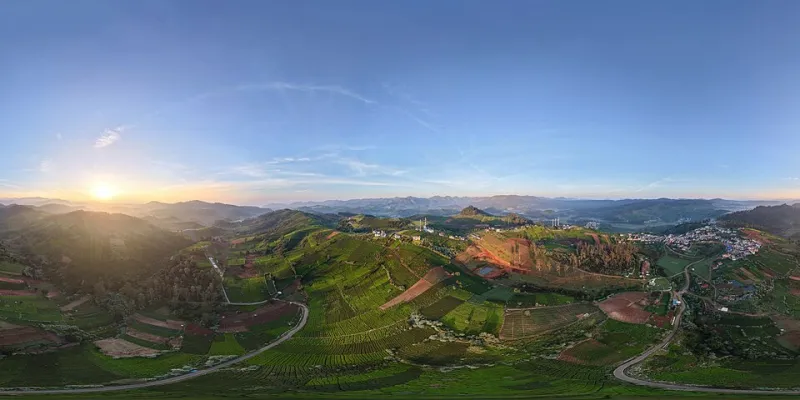
Photo: iMahesh, CC BY-SA 4.0, via Wikimedia Commons
There's a moment that happens to almost every traveler who makes it to a Chinese tea village for the first time. You're standing on a hillside at six in the morning, mist rolling between rows of low, dark-green bushes, and a woman who has been picking tea leaves since before you were born hands you a warm cup without saying a word. You drink it. And you realize this is the best cup of tea you've ever had in your life — and that nothing at a hotel minibar or airport lounge has ever come close.
That moment is why these villages are quietly becoming one of the most talked-about travel destinations in China. Not because of a viral social media post or a luxury brand partnership, but because word is getting out the old-fashioned way: traveler to traveler, cup to cup.
The Regions You Haven't Heard Of (But Should)
Most Americans who think about tea in China picture something vague and ancient — maybe a ceremony, maybe a temple. What they don't picture is a working farm tucked into the mountains of Yunnan province, where the trees producing pu-erh tea are older than the United States itself. Or a family compound in Anhui's Huizhou region, surrounded by the yellow-green rows of Keemun bushes that supply some of the world's finest black teas.
These aren't tourist attractions in the conventional sense. They're living agricultural communities that happen to sit inside some of the most jaw-dropping landscapes in all of China. The terraced hillsides of Xishuangbanna in southern Yunnan look like something a landscape architect dreamed up. The ink-wash mountain scenery around Huangshan in Anhui — which has been inspiring Chinese painters for a thousand years — frames the tea gardens like a living scroll painting.
Other regions worth knowing: Wuyishan in Fujian, home to the rocky-terrain oolongs that serious tea drinkers obsess over, and Longjing outside Hangzhou, which produces the grassy, chestnut-scented green tea that emperors used to reserve for themselves.
Staying With the Families Who Grow It
Here's where the "luxury" part gets interesting — and a little counterintuitive. The accommodations in these villages are not the Ritz. You're typically staying in a family-run guesthouse, sometimes a converted farmhouse, with simple rooms, home-cooked meals, and WiFi that may or may not cooperate. By conventional standards, it's modest.
But what you're getting in exchange is access that money genuinely cannot buy elsewhere. Families like the Mos in Yunnan's Jingmai Mountain area — a UNESCO World Heritage Site since 2023 — open their homes to small groups of visitors during harvest season, walking guests through every step of the process: the pre-dawn picking, the withering, the rolling, the drying. You're not watching a demonstration. You're doing it alongside people whose grandparents taught them the same techniques.
That's a different category of experience than a hotel spa or a Michelin-starred tasting menu. It's rare. It's irreplaceable. And increasingly, travelers are recognizing it as such.
When to Go and What to Expect
Timing matters enormously in tea country. The spring harvest — usually late March through early May — is the most celebrated, producing the first flush leaves that fetch the highest prices and carry the most delicate flavors. This is when villages are busiest and most alive, and when the landscape is at its most vivid green.
That said, autumn harvests in regions like Wuyishan offer a quieter, more intimate experience with fewer visitors. If you're someone who specifically wants to avoid crowds (and after the overtourism conversations of recent years, many travelers do), arriving in October can mean having a hillside almost entirely to yourself.
Practical notes for US visitors: most of these villages require some advance planning. English is limited outside of larger guesthouses, so booking through a regional travel agency or a platform like China Highlights that specializes in rural experiences is genuinely helpful. WeChat is essential for communication once you're there — more on that in another article.
The Bigger Picture: Tourism That Actually Helps
One thing that makes this travel trend feel genuinely good rather than just aesthetically pleasing: the economics work for the communities involved. Rural depopulation has been a serious issue in China's interior provinces, with younger generations leaving for cities. Sustainable agritourism — where the farm itself is the attraction — gives families a reason to stay and a financial model that rewards traditional knowledge rather than replacing it.
Several villages in Yunnan have developed small cooperatives that manage tourist visits collectively, ensuring that income is shared and that the number of visitors stays manageable. It's not perfect, and there are real tensions around development and authenticity that locals navigate carefully. But compared to the resort-and-souvenir-shop model that has hollowed out other scenic areas in China, the tea village approach feels meaningfully different.
How to Start Planning
If you're a first-timer, Hangzhou's Longjing area is the most accessible entry point — it's close to a major international airport and the village infrastructure is well set up for visitors. From there, Anhui's tea country is a reasonable addition to a broader trip that might include Huangshan.
For travelers who want something more remote and more immersive, Yunnan is the destination. Budget at least four to five days in the region — the distances between sites are significant, and rushing through defeats the entire purpose. This is, after all, a culture built around the idea of slowing down.
Bring layers. Bring a notebook. Bring an open mind about what luxury is supposed to feel like. And leave room in your carry-on, because you will absolutely be bringing tea home.