Xiaolongbao Is Having a Moment — And It's About Way More Than Soup Dumplings
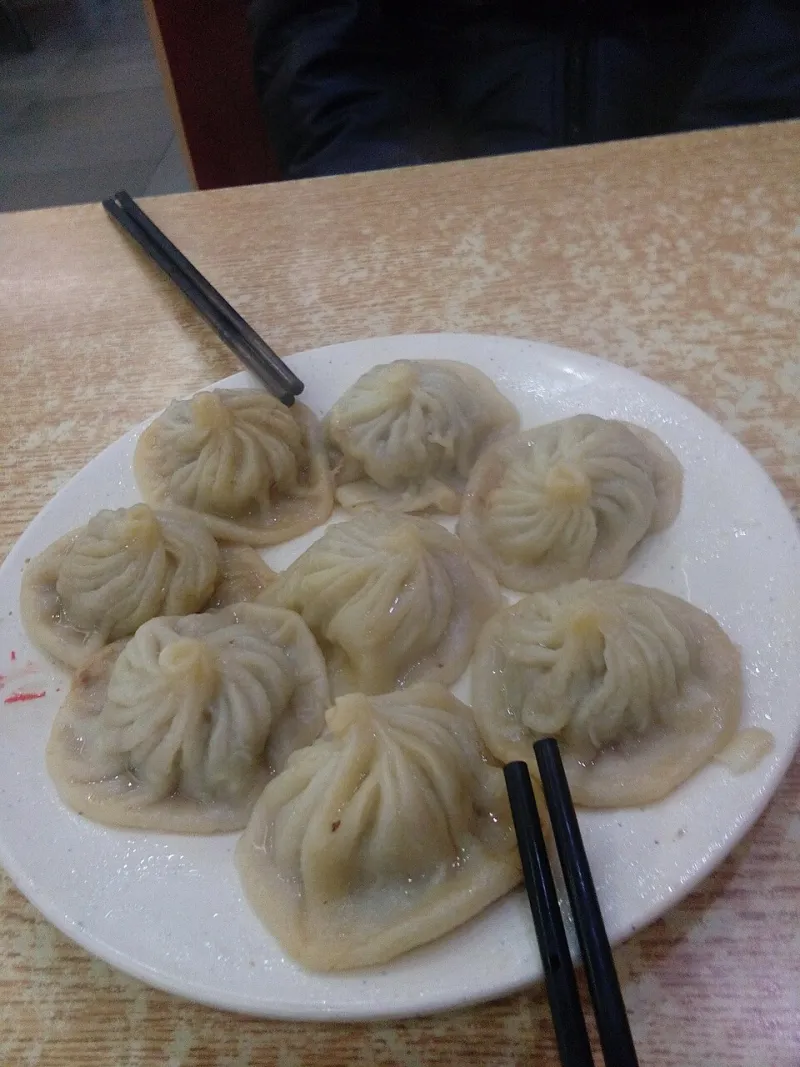
Photo: 我乃野云鹤, CC BY-SA 4.0, via Wikimedia Commons
There's a specific kind of anticipation that comes with watching a bamboo steamer basket arrive at your table. The lid lifts. Steam curls upward. Twelve translucent parcels sit in neat formation, each one glistening, each one holding a small reservoir of hot broth that will absolutely burn your tongue if you don't follow the rules. This is the xiaolongbao experience — and right now, across China's major cities, an entire generation is obsessing over it in ways that are genuinely fascinating to watch.
For most Americans, xiaolongbao (小笼包, pronounced roughly like "shao-long-bow") might ring a bell from a trip to a Chinese-American restaurant or a dim sum brunch in a city like San Francisco or New York. They're the soup dumplings — delicate wrappers, juicy pork filling, a spoonful of liquid magic inside. But what's happening with them in China right now goes well beyond the version most of us know. It's a food story, yes, but it's also a story about identity, generational change, and what happens when a culture decides to take its own culinary heritage seriously in a whole new way.
From Grandma's Kitchen to Artisan Storefront
Xiaolongbao has roots in the Jiangnan region — the fertile, water-laced area around Shanghai and Jiangsu province — where it's been a breakfast staple and dim sum classic for well over a century. The traditional version, still served at legendary spots like Nanxiang Mantou Dian in Shanghai's Old City, is a masterpiece of restraint: thin wrapper, seasoned pork, a spoonful of aspic that melts into broth during steaming.
For decades, this was comfort food — something you grabbed at a neighborhood shop before work, not something you analyzed. Then something shifted.
China's millennial and Gen Z consumers, many of them raised with higher disposable incomes and a deep familiarity with global food culture via social media, started applying the same discerning eye to traditional cuisine that their counterparts in the US apply to, say, specialty coffee or sourdough bread. Suddenly, the sourcing of the pork mattered. The thickness of the skin — measured in grams, sometimes — became a point of pride or criticism. The clarity and depth of the broth inside became a marker of craftsmanship.
New-wave xiaolongbao shops began opening across Shanghai, Beijing, Chengdu, and Guangzhou, some with open kitchens where you can watch the folding process, others with menus that read like tasting notes. Black truffle filling. Crab roe and pork. Foie gras. Wagyu beef broth. The traditionalists grumbled. The young diners lined up around the block.
What This Says About Modern Chinese Eating Culture
Food trends don't happen in a vacuum, and the xiaolongbao wave is worth understanding in context. For much of China's rapid modernization period, Western fast food and international dining carried a certain aspirational cachet — particularly for younger urban consumers. That dynamic has been quietly reversing.
A growing sense of cultural confidence among Chinese millennials and Gen Z has translated into genuine pride in domestic cuisine, traditional techniques, and regional food heritage. This isn't nostalgia exactly — it's more like rediscovery with a critical eye. These consumers want traditional food, but they want it executed with the same level of intentionality and quality consciousness they'd apply to any premium product.
Xiaolongbao, with its exacting technical demands (a properly made one requires precise skin thickness, the right gelatin ratio in the filling, and a specific number of folds at the top — 18 is considered the gold standard in traditional practice), turns out to be the perfect canvas for this movement. It rewards expertise. It has a rich regional history. And it photographs beautifully, which in the age of Xiaohongshu and Douyin (China's TikTok) is not a trivial consideration.
The Etiquette Americans Get Wrong (And How Not To)
If you're planning to eat xiaolongbao in China — and you absolutely should — there are a few things worth knowing before you sit down, mostly because the wrong approach will result in either a burned mouth, a ruined shirt, or a look of quiet dismay from the person across the table.
The method: Use chopsticks to gently lift one dumpling from the basket and place it in the ceramic soup spoon that comes with your order. Do not bite directly into it. Pierce the skin slightly with your teeth or chopstick tip to let some steam escape, then take a small sip of the broth before eating the rest. This is not just etiquette — it's physics. The broth inside is close to boiling.
The vinegar: A small dish of Zhenjiang black vinegar with julienned ginger usually arrives alongside your order. Dip sparingly — you're complementing the flavor, not masking it.
The pace: Xiaolongbao are best eaten immediately. They don't wait well. If you're taking photos (and you will be), be efficient about it.
Don't ask for soy sauce to dip them in. This is considered a bit of a faux pas at any serious xiaolongbao establishment and will mark you as someone who doesn't quite get it yet.
Where to Find the Best Ones When You're There
Shanghai is ground zero, and any serious visit should include at least one meal at a traditional institution alongside one stop at a newer artisan spot to feel the contrast.
For tradition: Nanxiang Mantou Dian in the Yu Garden area is the classic pilgrimage. Lines are long, especially on weekends. Go early or plan to wait — and it's worth it.
For the new wave: Neighborhoods like Jing'an and the Former French Concession area in Shanghai are thick with newer dumpling concepts. Look for spots with open kitchens and short, focused menus — those are usually signs of a kitchen that's serious about what it's doing.
Beyond Shanghai: Din Tai Fung, the Taiwanese chain that many Americans actually know from US locations, has outposts across mainland China and remains a reliable benchmark, particularly in Beijing and Chengdu. It's not cutting-edge anymore, but the consistency is exceptional and the experience is accessible for first-timers.
In Chengdu, keep an eye out for local variations that incorporate Sichuan flavors — chili oil xiaolongbao exist, and they are exactly as good as they sound.
Why Americans Should Pay Attention
Here's the thing: the xiaolongbao moment in China is a preview. The artisanal dumpling movement, the obsessive quality focus, the cultural reclamation of traditional food — these trends have a way of traveling. Chinese-American chefs in cities like New York, LA, and Chicago are already watching what's happening in Shanghai and bringing influences back. The soup dumpling bars opening in American cities right now are, in part, a downstream effect of what's been percolating in China for the past several years.
But more immediately, if you're heading to China and you want a single food experience that will tell you something true about where the country is right now — about its confidence, its creativity, and its complicated relationship with its own past — pull up a stool at a good xiaolongbao shop, follow the rules, and pay attention. There's a lot in that steamer basket.