Fifty Dollars a Day: An Honest Ledger of What China Actually Costs in 2026
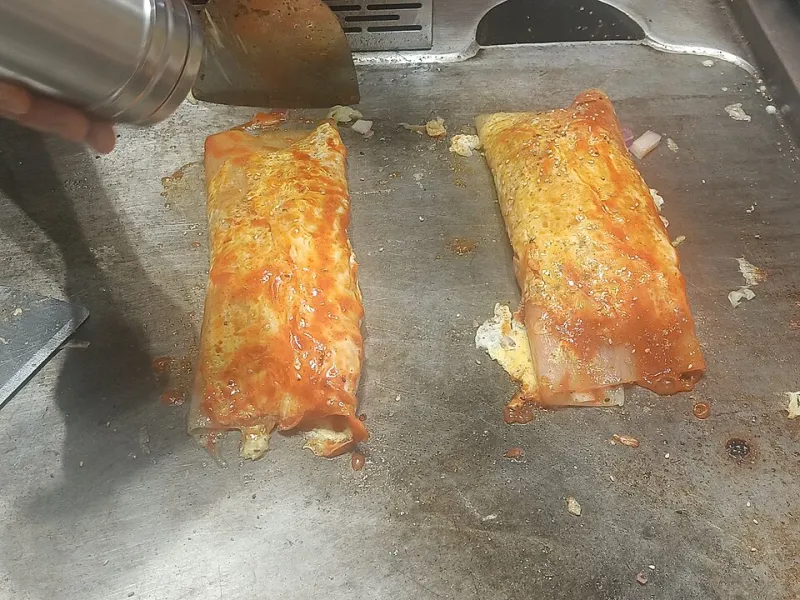
Photo: Fumikas Sagisavas, CC0, via Wikimedia Commons
Ask ten travelers what a day in China costs and you'll get ten answers, all wrong in different directions. One person swears it's $30. Another spent $180 and doesn't want to talk about it. The truth is that $50 a day — roughly 355 RMB at the exchange rate that has sat near 7 to the dollar — is still a real, workable number in 2026. It just behaves very differently depending on which city you wake up in.
Here's the honest ledger.
First, the conversion that matters
$50 lands around 355 RMB. Anchor prices to keep in your head: a metro ride is 3–7 RMB, a bowl of noodles runs 15–30, a flat white is 28–38, and most city museums are free with a passport reservation. Those numbers are stable. What isn't stable is lodging, which is where your budget lives or dies.
Beijing: doable, if you sleep in a dorm
Beijing is expensive in exactly one category and reasonable in the rest.
- Dorm bed in a hostel: 70–110 RMB
- Hutong guesthouse private room: 380 RMB and up
- Breakfast (jianbing and soy milk): 12–16 RMB
- Lunch noodles: 25 RMB
- Dinner dumplings plus a beer: 60 RMB
- Metro, all day: 10 RMB
- Forbidden City ticket: 60 RMB (book about a week ahead)
- Temple of Heaven: 34 RMB
- Coffee: 30 RMB
Run that as a dorm day and you're at roughly 330–360 RMB — right on the line. Swap in a private room and the same day jumps to about $80. Beijing's gift to budget travelers is that its best experiences are free: the park culture, the hutongs, the lakes, the museums. Its trap is taxis and rooftop bars.
Shanghai: the same $50 works thinner
Shanghai is not cruel about money, it's just constantly suggesting you spend some.
- Dorm bed: 100–140 RMB
- Coffee, and you will want coffee: 35 RMB
- Breakfast from a bakery: 10–15 RMB
- Lunch: 35 RMB
- Dinner: 90 RMB
- Metro: 4–6 RMB per ride
- Yu Garden: 40 RMB
- Shanghai Museum: free
- Any observation deck: 180–220 RMB
Same template, about $58–65. To get back to $50 you make three decisions: skip the skyline elevator and walk the Bund for free, eat your big meal at lunch instead of dinner, and treat the French Concession as the attraction it is. Shanghai rewards walking more than any city in the country.
Chengdu: where $50 feels like $90
Chengdu is the city that makes other budgets look silly.
- Guesthouse private room: 200–260 RMB
- Park tea, bottomless, all afternoon: 20 RMB
- Bowl of noodles: 12 RMB
- Hotpot for one, with beer: 90–130 RMB
- Panda Base entry: 55 RMB (be there at 7:30 a.m.)
- Metro: 2–5 RMB
A comfortable day here comes in around 300 RMB, and that includes a sit-down hotpot. You are not scraping in Chengdu. You are living well and still keeping change for a foot massage.
Xi'an: the best value of the big four
- Hostel bed: 60–90 RMB
- Roujiamo: 12 RMB
- Biangbiang noodles: 22 RMB
- Terracotta Warriors ticket: 120 RMB, plus 8–30 RMB for the bus
- City Wall: 54 RMB, or rent a bike on top of it
- Muslim Quarter snacking: 50 RMB goes a long way
Xi'an is the city where the $50 ceiling becomes a floor. You can eat extremely well, see the big-ticket sights, and finish the day under $45 without trying.
The line items nobody budgets for
This is where the plan usually cracks. Water, three bottles: 8 RMB. Bubble tea because it's 34 degrees: 18 RMB. Two Didi rides when your feet quit: 45 RMB. An eSIM for the trip: $8–15 once. A locker at a museum: 15 RMB. Tissues for the bathroom because you forgot: 4 RMB. The small ceramic bowl you didn't need: 60 RMB.
Call it 100 RMB a day of invisible spending. Build it in now and you won't be doing math at midnight.
Where $50 quietly breaks
- High-speed rail days. Beijing to Xi'an in second class is around 515 RMB. That's $72 in a single click, and it eats an entire day's budget before you've had breakfast.
- Shanghai Disney. Tickets run 475–799 RMB depending on the date.
- Cocktails. 70–100 RMB each in any major city. Beer is 10–20.
- Hotpot for two. Doubles fast. Great value solo, less so as a pair.
- Any ice festival, theme park, or ticketed show. These are $60–120 line items.
The two-day rule that actually works
Stop trying to spend exactly $50 every day. Plan $35 days and $70 days and let them average out. Museum-and-noodles days fund the train ticket days. It's also how you avoid the saddest genre of travel mistake: skipping something extraordinary because the daily number got tight.
What fifty dollars really buys
In 2026, $50 a day in China buys you a clean bed, three good meals, unlimited public transport, one paid attraction, and enough left over for tea you didn't plan on. It does not buy you the skyline view, the tasting menu, or the private room in Shanghai. That's not a warning. It's just what the number is. Spend it in Chengdu and Xi'an and you'll feel rich. Spend it in Shanghai and you'll learn to walk.