The 6 A.M. Show: Why China's City Parks Are the Best Free Ticket in the Country
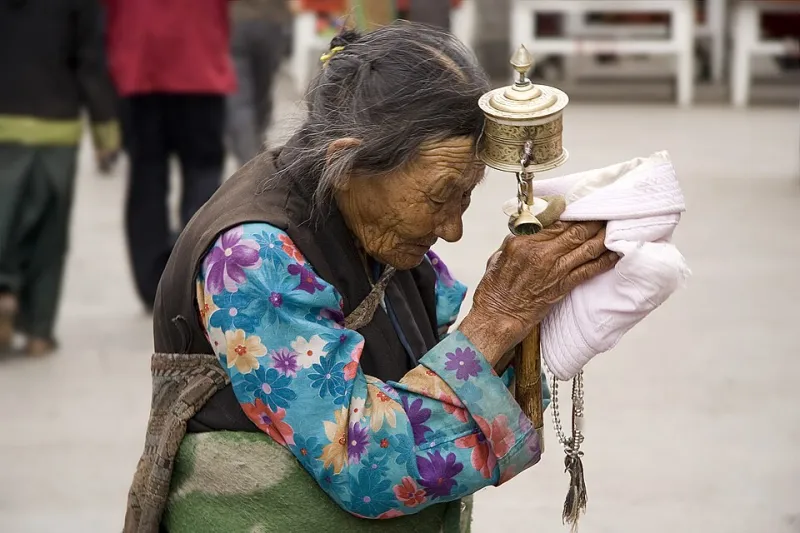
Photo: Luca Galuzzi (Lucag), CC BY-SA 2.5, via Wikimedia Commons
The first time it happens you think you've walked into a rehearsal. It's 6:15 in the morning, the light is still gray, and there are forty people in a loose grid under the trees moving their arms in slow unison while a speaker somewhere plays something that sounds like a river. Two women are dancing a waltz on the pavement. A man is writing poetry on the ground with a giant brush and a bucket of water. Someone is singing opera into a portable amp with the confidence of a person who has done this every morning for eleven years.
This is not a festival. It's a Tuesday.
The daily theater nobody sells tickets to
American travelers tend to treat parks as transitions — the thing you cut through on the way to the attraction. In China, the park at dawn is the attraction. Retired people in this country have built an entire public social life out of them, and they've been refining it since before you were booking flights.
You'll see, roughly in this order as the sky brightens:
- Tai chi and qigong circles, usually the earliest, usually silent, usually happy to have a quiet observer.
- Ballroom dancing, couples and singles, portable speaker, surprisingly serious footwork.
- Jianzi, the weighted shuttlecock kicked in a circle. It looks impossible. It is not. It is the single easiest thing to join.
- Opera and choir singing, amplified, lyric books propped on music stands.
- Xiangqi chess battles, old men, stone tables, small crowds, total silence from everyone except the players.
- Water calligraphy, long-handled brushes, pavement as paper, characters that vanish in minutes.
- Bird cages, hung in trees for the morning air, owners comparing notes.
- Kites, diabolos, and a man with a sword who is not going to hurt anyone.
By 9 a.m. it's thinning out. By 10 it's just a park again.
Where to go, city by city
Beijing. Temple of Heaven's East Gate corridor is the classic, and the long covered walkway is where the dancing, singing, and card games happen shoulder to shoulder. Ritan Park near the embassy district is smaller and easier to read.
Shanghai. Fuxing Park in the former French Concession is the prettiest version of this scene, with dancing under the plane trees and tai chi in the corners.
Chengdu. People's Park, where the teahouse opens early and the whole thing is slower and more conversational. Bring 20 RMB for tea and stay until it stops making sense to leave.
Xi'an. Xingqinggong Park and the strip along the City Wall, where the crowd is a little younger and the running is a little more serious.
The etiquette, which is mostly just manners
Nobody is going to hand you a rulebook, so here's one.
Watch a full cycle before you do anything. A tai chi set has a beginning and an end. Standing in the middle of it with your phone out is the equivalent of walking onto a stage.
Ask before you film faces. Most people will say yes and be delighted. Some won't, and the ones who won't tend to be older women who have been photographed by strangers for forty years. Point at your phone, raise your eyebrows, wait for the nod. If it's a no, smile and move on.
Join at the edge, never the center. In a tai chi group, stand one row behind and mimic. In a jianzi circle, catch the shuttlecock when it comes your way, kick it back badly, and let everyone laugh. That laugh is the point.
In the chess corner, keep your hands to yourself and your mouth shut. There's a whole proverb about not advising the players. It is taken seriously.
Don't step on the wet calligraphy. Those characters are the only copy.
Say the two phrases you'll actually use. Zǎoshang hǎo — good morning. Wǒ kěyǐ shìshi ma — can I try? That's it. That's the whole language requirement.
The mistake to avoid
Don't turn it into content. The instant you start orchestrating shots, the park notices, and the thing that made it worth waking up for evaporates. The best version of this morning is the one where you put the phone in your pocket and stand in a circle of strangers kicking a feathered weight at each other for twenty minutes.
Go tomorrow, not someday
Set an alarm for 5:45. Wear something you'd be fine exercising in. Walk to the nearest park with more than one gate — there's one within a kilometer of wherever you're staying, there always is. Buy a tea if there's a stall. Stand at the edge of the first circle you see.
It's free, it starts early, and nobody back home will believe you when you describe it.