More Than Pretty Lights: What the Lantern Festival Is Really Asking You to Let Go Of
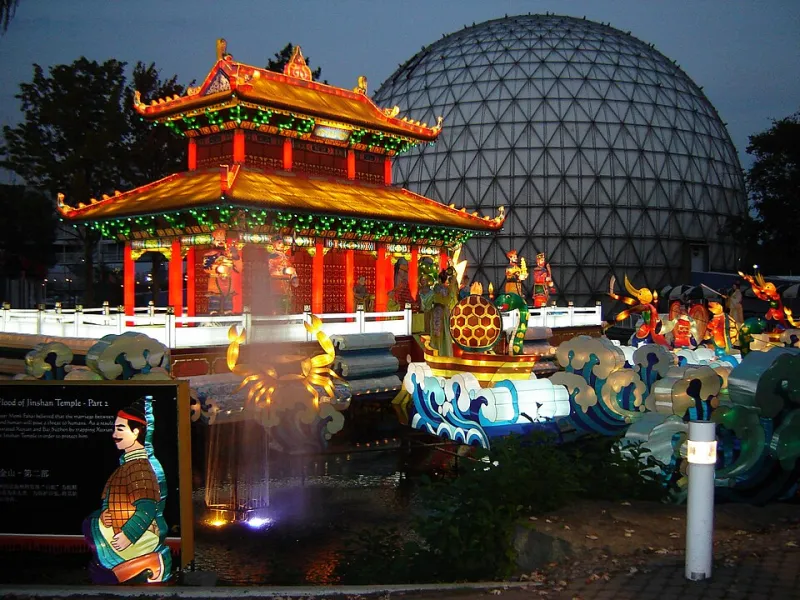
Photo: Collier7344 at English Wikipedia, Public domain, via Wikimedia Commons
The photos will lie to you, just a little.
Not because they're fake — the lanterns really are that stunning, the night sky really does fill up like something from a dream sequence. But a photo can't carry the weight of what's actually happening when a grandmother kneels at a riverbank, whispers something to a paper lantern, and lets it go. That moment isn't about aesthetics. It's about a second chance — or at least the hope of one.
Yuanxiao Jie, known in English as the Lantern Festival, falls on the 15th day of the first lunar month, marking the final chapter of the Chinese New Year celebrations. By the time it arrives, the fireworks of New Year's Eve have faded, the family reunion dinners have been eaten, and the red envelopes have been opened. The Lantern Festival is the exhale — the moment where China collectively pauses, looks up at the first full moon of the year, and decides what kind of year it's actually going to be.
For American visitors who happen to be in China during this window (usually late January through mid-February, depending on the lunar calendar), it's one of the most accessible and genuinely moving cultural experiences you can stumble into. But only if you know what you're actually looking at.
The Mythology Behind the Moon
Like most Chinese festivals, Yuanxiao has roots that branch in several directions at once. One of the oldest explanations traces back to Taoist tradition, where the 15th day of the first lunar month was sacred to Tianguan, the celestial official responsible for bestowing good fortune. Lighting lanterns was a way of catching his attention — a glowing petition sent skyward.
Another story, more poetic and widely repeated, involves a crane that descended from heaven and was killed by villagers. Fearing punishment from the Jade Emperor, the villagers lit lanterns to trick him into thinking their town was already on fire — saving themselves through collective cleverness. There's something very human in that story. A community, scared and resourceful, finding a way through together.
But the thread that runs deepest, the one you'll hear most often if you ask locals what the festival actually means to them, is reunion. The full moon is a symbol of wholeness in Chinese culture — of family gathered, of cycles completed. The Lantern Festival is the last night before the holiday truly ends and everyone scatters back to work, back to other cities, back to ordinary life. The lanterns aren't just decoration. They're a farewell and a wish, wrapped in paper and set loose.
What You'll Actually See (And Where)
If you're planning to be in China during this time, your options range from massive public spectacles to quiet neighborhood traditions, and both are worth seeking out.
In cities like Xi'an, Chengdu, and Pingyao, the old town districts transform entirely. Thousands of red and gold lanterns line the streets, riddle competitions are chalked onto boards (solving one is considered good luck), and vendors sell yuanxiao — the soft, chewy glutinous rice balls filled with sesame paste, red bean, or peanut that give the festival its other name. Eating them is non-negotiable. They're sweet, a little sticky, and taste like something your grandmother would have made, even if your grandmother is from Ohio.
In smaller towns and rural areas, the festival takes on a quieter, more intimate quality. Families gather at local temples or riversides. Paper lanterns — the floating kind, not the hanging kind — are written on, lit, and released into the water or the sky. If you can find your way into one of these moments, even as a respectful observer, it'll stay with you longer than any temple tour.
Beijing's Shichahai district and the area around the Summer Palace are popular spots for urban lantern displays. Nanjing's Confucius Temple area runs one of the country's most famous Lantern Festival markets. And if you're in Zigong, Sichuan — often called the "City of Lanterns" — the annual lantern festival there is frankly on another level, drawing millions of visitors with elaborate illuminated sculptures that make Times Square look understated.
How to Participate Without Just Being a Tourist
Here's where a lot of American travelers miss an opportunity. The Lantern Festival is participatory by nature. It's not a performance you watch from behind a velvet rope — it's a living tradition that welcomes engagement, as long as you come in with some awareness.
First, learn the riddles. Lantern riddle-guessing (猜灯谜, cāi dēng mí) is one of the festival's oldest traditions. Riddles are written on paper and attached to lanterns; solve one correctly and you win a small prize. Even attempting to puzzle through one in broken Mandarin will earn you enormous goodwill from locals nearby. Bring a translation app and lean into the confusion.
Second, eat the yuanxiao with intention. Ask the vendor or your host what filling they recommend. In northern China, the balls are typically called yuanxiao and are made by shaking the filling in a basket of rice flour. In the south, they're called tangyuan and are hand-rolled. The difference is subtle but real, and asking about it opens conversations.
Third, if you're going to release a lantern, do it right. Write something on it first. It doesn't have to be in Chinese — the act of naming what you're releasing, or what you're hoping for, is the point. Locals will often help you if you ask. And please, check local regulations first; many cities have restricted sky lanterns for fire safety reasons, and floating river lanterns are more commonly permitted.
What Locals Want You to Know
Spend any time talking to Chinese families during this festival and a few themes keep surfacing. One is the weight of distance — with so many people working far from their hometowns, the New Year holiday is often the only extended time families have together. The Lantern Festival is the last night of that window. The lanterns, in many households, are a way of holding onto that feeling just a little longer.
Another theme is hope without pressure. Unlike the intense expectations of New Year's Eve — the perfect dinner, the right words, the lucky red envelope amounts — the Lantern Festival feels lighter. More forgiving. One woman in Chengdu described it to me as "the night you get to start over from your starting over." A second chance at the second chance, she said, laughing.
That's not a bad thing to carry with you as a traveler, either.
Practical Notes for US Visitors
The Lantern Festival date shifts each year with the lunar calendar, so check before you book. It typically falls somewhere between late January and mid-February. Most major cities will have public events; smaller towns may require a bit more research or a local contact to find the good stuff.
Dress warmly. February nights in most of China are cold, and the best lantern displays happen after dark. Layers are your friend.
Bring cash for street food. Yuanxiao vendors, lantern sellers, and riddle-game stalls are rarely set up for mobile payments from foreign accounts.
And give yourself more time than you think you need. The Lantern Festival isn't something you rush through on the way to your next destination. It rewards the people who slow down, look around, and let the light actually land on them.
That's kind of the whole point.