You've Been Invited to Dinner. Now What? A No-Stress Guide to Chinese Hospitality Customs for American Visitors
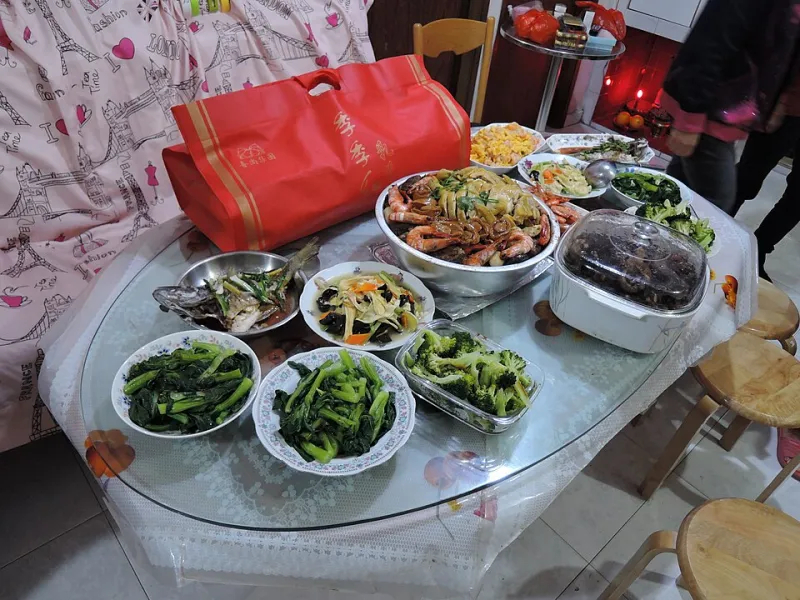
Photo: Geoffreyrabbit, CC BY-SA 4.0, via Wikimedia Commons
Say you've been in Chengdu for a few days. You've made a connection — a colleague, a neighbor of your guesthouse owner, someone you met on a hike — and they've invited you to their home for dinner. Or maybe it's a restaurant banquet. Either way, you said yes, and now you're standing outside wondering what to bring, where to sit, and whether you're about to accidentally insult someone without knowing it.
This happens more than you'd think. And the good news is that Chinese hosts are almost universally gracious and forgiving of cultural missteps from foreign guests. But a little preparation goes a long way — not just for avoiding awkward moments, but for actually deepening the connection. Because when you show up knowing even a few of the unspoken rules, it signals something important: that you came to China to engage, not just to observe.
The Invitation Itself: What It Really Means
First thing to understand: a dinner invitation in China is a meaningful gesture. It's not the casual "we should grab food sometime" that Americans throw around and half the time don't follow up on. When a Chinese person invites you to their home or hosts a dinner in your honor, they're extending genuine hospitality — often at real personal expense and effort.
Accept with enthusiasm. Declining is fine if you genuinely can't make it, but vague non-answers read as rude. And if you do accept, show up. Canceling last minute is a much bigger deal here than it might be back home.
Bringing Something: The Gift Situation
Showing up empty-handed to a Chinese dinner is technically okay, but bringing something is always appreciated and noticed. The key is knowing what to bring — and what to avoid.
Fruit is a safe, universally appropriate gift. A nice box of pastries or mooncakes (if it's around the Mid-Autumn Festival) works well. Baijiu or quality tea are good options if you know your host drinks or is into tea culture. A small, thoughtful item from your home state — something regional and genuinely American — can be a fantastic conversation starter and is often received with real delight.
What to skip: clocks (associated with death in Chinese culture), anything in sets of four (the number four sounds like the word for death in Mandarin), and anything wrapped in white or black paper, which are mourning colors. Green hats are also a no — long story, but trust the advice.
Present your gift with two hands. Don't be surprised if your host sets it aside without opening it in front of you. That's normal and polite, not dismissive.
At the Table: Seating, Serving, and the Art of the Lazy Susan
If there's a round table with a rotating center — and there often is — you've entered banquet mode. The seat facing the door is the seat of honor, traditionally reserved for the most important guest. Your host will likely direct you there. Follow their lead on seating; don't just grab a chair.
Dishes come out family-style and shared. Nobody has their own entrée. The host will often serve you first, placing food in your bowl as a gesture of welcome. Accept it graciously. You can reciprocate by serving others, which is genuinely appreciated — it shows you're paying attention.
Wait for the host to signal the start of the meal, often with a toast. Speaking of which...
The Toast: More Important Than You Think
Toasting — ganbei, literally "dry cup" — is a central ritual at Chinese dinners. The host will typically make the first toast, often welcoming you specifically. Make eye contact. Clink glasses (slightly lower than the other person's glass if you want to show respect). If you drink, drink. If you don't drink alcohol, it's completely acceptable to toast with tea or a soft drink — just be upfront about it early in the evening rather than trying to fake-sip baijiu all night.
You'll likely be toasted individually multiple times throughout the meal. It's a gesture of inclusion and warmth. Toast back when it feels right. You don't have to drain your glass every time unless you want to be horizontal by dessert.
Refusing Food (and Why It's Complicated)
Your host is going to keep offering you food. Repeatedly. This is hospitality in action, not pressure — though it can feel like the latter. The cultural script here involves a bit of back-and-forth: you decline once, they insist, you accept. Declining firmly and repeatedly can actually come across as rejecting the host's generosity.
If you have a genuine dietary restriction or allergy, communicate it clearly and early — ideally before the dinner. Chinese hosts take feeding their guests seriously, and they'd rather know in advance than have you quietly pushing food around your plate all evening.
Leaving a little food on your plate signals that you've had enough and were well-fed. Cleaning your plate completely can sometimes suggest the host didn't provide enough — though this varies by region and generation, and most younger urban hosts are pretty relaxed about it.
The Bill: Don't Even Try
If your Chinese host has organized the dinner, they are paying. Full stop. Reaching for the check is a nice gesture but expect to lose that battle. The concept of splitting a bill among friends is not as ingrained here as it is in American social culture — whoever organized or initiated the meal typically covers it, with the expectation that the favor will be returned another time.
The most gracious thing you can do is thank your host sincerely, both at the table and afterward. A follow-up message the next day expressing genuine appreciation — and maybe mentioning a specific dish you loved — lands really well.
The Bigger Picture
None of this is about performing cultural compliance or memorizing a rulebook. It's about showing up with the same openness and care that your host is extending to you. Chinese hospitality is genuinely warm and generous, and the people who have the best experiences in China are usually the ones who lean into that — who let the dinner run long, who try the dish they can't identify, who ask questions and listen to the answers.
The table is where a lot of the real China happens. Show up ready for it.