Your Brain Is Lying to You: The Subtle Culture Clashes That Catch American Travelers in China Off Guard
You've cleared customs. You've survived the airport. You're standing on a sidewalk in Chengdu or Xi'an or Shenzhen, and something feels off — not wrong, exactly, but slightly tilted. Like a painting hung just a few degrees crooked. You can't name it yet. But your brain is already working overtime trying to file the experience somewhere familiar, and it keeps coming up empty.
That's not jet lag. That's culture shock — the quiet, insidious kind that nobody warns you about because it doesn't make for a good checklist. The obvious stuff — navigating a squatting toilet, figuring out how to pay for anything without cash — gets all the attention. But the moments that genuinely rewire your thinking tend to be smaller. Subtler. Almost embarrassingly mundane.
And here's what makes it genuinely interesting: Chinese travelers visiting the US are experiencing the exact same sensation in reverse. Understanding both sides of that mirror is one of the most useful things you can do before you go.
Silence Means Something Completely Different
In most American social contexts, silence between two people who are talking is a problem. It signals awkwardness, disagreement, or disengagement. We rush to fill it — with filler words, follow-up questions, nervous laughter. We've been trained since childhood that a good conversationalist keeps the air moving.
In China, a pause can signal the opposite. It often means someone is actually thinking — taking your words seriously enough to sit with them before responding. When a Chinese colleague or host goes quiet after you've said something, they may be showing you respect. Your instinct, though, will be to jump back in and explain yourself, which can read as impatience or self-doubt on your part.
Meanwhile, Chinese visitors to the US frequently report feeling steamrolled by how quickly Americans talk over each other, how finishing someone's sentence is treated as a sign of enthusiasm rather than rudeness. It's the same phenomenon, experienced from opposite ends.
Public Closeness, Private Distance
Americans tend to keep strangers at arm's length — literally. Personal space is a real and respected thing. You don't crowd someone at a crosswalk. You leave a seat between yourself and an unknown person in a waiting room if you can. Violating that bubble, even accidentally, comes with a social tax.
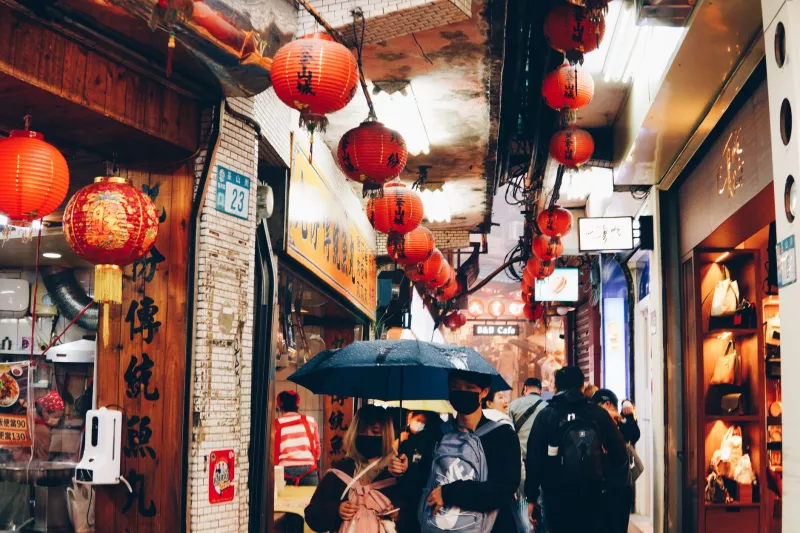
In China's cities, especially in transit hubs, markets, and popular restaurants, that bubble simply doesn't exist in the same way. People stand close. Lines compress. Strangers share tables without introduction at busy noodle shops, eat their meal in silence, and leave. There's no hostility in it — it's just efficient coexistence. But for Americans, the first time someone stands close enough in a queue that you can feel their breath, the alarm bells go off.
Flip that around: Chinese tourists in American suburbs often describe the experience as eerily quiet and isolating. The wide sidewalks with no one on them. The strip malls with vast parking lots and almost no pedestrian life. The way neighbors wave from driveways but never seem to actually congregate. What reads as peaceful independence to Americans can feel profoundly lonely to someone from a city of ten million where public life is the default mode.
Who Pays — And Why It Feels Like a Power Move
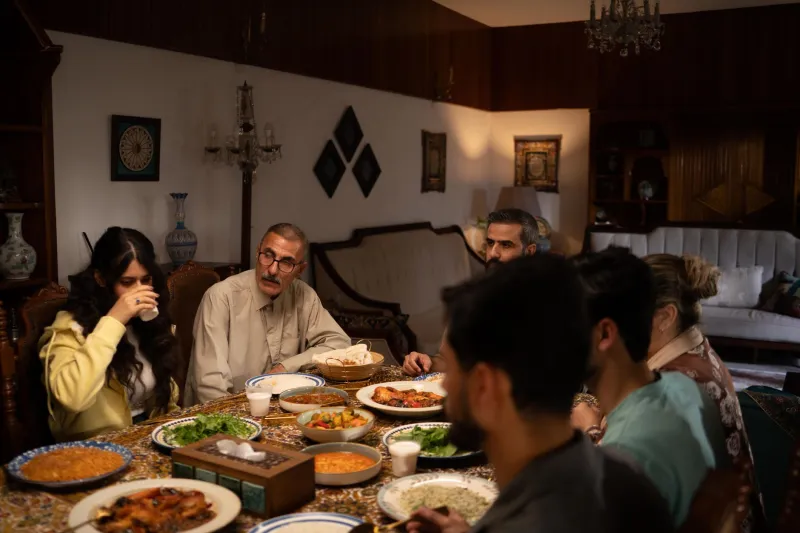
Going out for dinner with a new Chinese acquaintance and splitting the bill? Don't. Or rather — understand that if they insist on paying, they mean it, and accepting graciously is the correct move. The concept of qǐng kè — treating someone to a meal — is woven into how relationships are built and maintained. Paying for the table is an act of generosity and face-giving, not a transaction to be divided up with a calculator app.
Americans, raised on the principle that going Dutch is the fairest and least complicated option, often push back. They insist on contributing. They reach for their wallet. They mean well. But in that moment, they're accidentally making things awkward in a way they don't fully feel — because the host now has to argue harder to do something that was never really up for debate.
The reverse confusion? Chinese visitors watching Americans split a dinner bill down to the cent, sometimes even calculating tax and tip individually, and wondering what kind of friendship this actually is.
Directness as Rudeness (Or the Lack of It as Dishonesty)
Americans value straight talk. We admire people who say what they mean, and we're mildly suspicious of those who don't. In professional settings especially, getting to the point is considered a form of respect for everyone's time. Hedging too much can make you seem untrustworthy or weak.
In many Chinese social and professional contexts, getting to the point too fast — especially when the point is a request, a complaint, or a disagreement — can feel aggressive. There's often a scaffolding of context, relationship-building, and indirection that comes first. Saying no directly is frequently avoided not because the person is being deceptive, but because a blunt refusal puts both parties in an uncomfortable position. The no is there; it just arrives wrapped differently.
For Americans, this can feel like mixed signals or even evasion. For Chinese visitors navigating American directness, the experience can feel startlingly blunt — like skipping several chapters of a conversation you were supposed to have first.
The Smile That Doesn't Mean Happy
This one catches people badly. In the US, a smile is a social lubricant — it signals friendliness, openness, and that things are going fine. Retail workers smile. Strangers on the street smile. We smile in photographs whether we mean it or not.
In China, smiling at strangers isn't a default social behavior in the same way. A service worker who doesn't smile isn't being rude — they're being professional. A person who smiles while delivering bad news might be managing embarrassment or discomfort, not expressing satisfaction. Americans frequently misread neutral expressions as unfriendliness, and broad American smiles can read as slightly unhinged or performative to Chinese observers who haven't encountered the cultural norm.
Neither interpretation is wrong. Both are just operating from a completely different emotional vocabulary.
What the Weirdness Is Actually Telling You
Here's the thing about cognitive dissonance: it's only uncomfortable when you're fighting it. The moment you stop trying to file an experience into a familiar category and just let it exist as different, the discomfort starts to ease.
The pause that feels awkward is someone thinking carefully. The crowded table is an invitation to coexist. The host grabbing the bill is building something with you. The indirect answer is protecting both of you from an unnecessary collision.
None of these things are wrong. They're just calibrated to a different set of unspoken agreements — the kind every culture runs on without realizing it, until someone from outside shows up and starts doing the double-take.
That double-take, by the way, is exactly the right response. It means you're paying attention. And in China, that's where the real travel starts.