The Festivals Nobody Told You About: China's Most Remarkable Local Celebrations and How to Actually Find Them
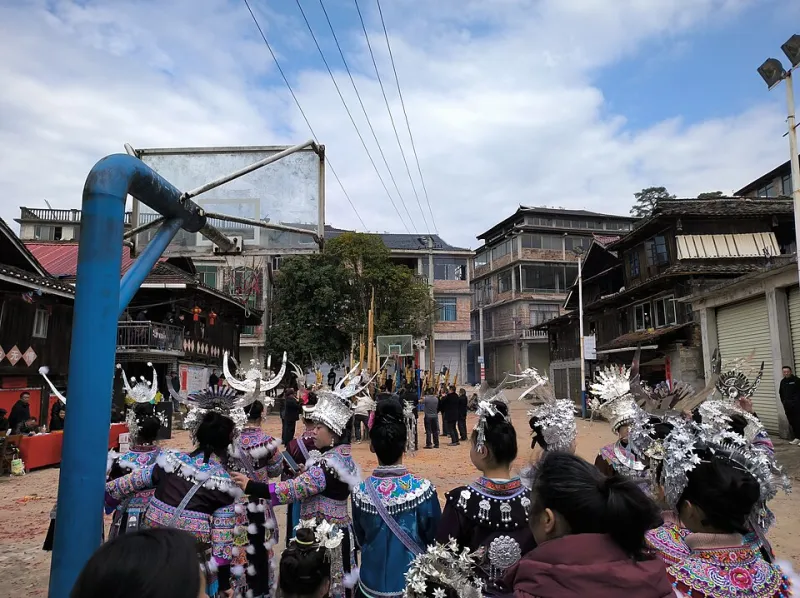
Photo: Moreven, CC BY-SA 4.0, via Wikimedia Commons
Most Americans planning a trip to China build their itinerary around the big stuff — the Great Wall, the Terracotta Warriors, maybe a river cruise through the karst peaks of Guilin. And if they're timing it around a holiday, it's usually Chinese New Year, which is spectacular but also genuinely chaotic, expensive, and crowded in ways that can overwhelm even experienced travelers.
Here's the thing, though: China has hundreds of regional festivals scattered across its calendar, many of them tied to ethnic minority communities and agricultural rhythms that have nothing to do with the national holiday schedule. These are the celebrations where you're more likely to be the only foreigner in the crowd — where you'll eat food that doesn't appear on any tourist menu, watch rituals that have been passed down for generations, and get the kind of unrepeatable travel experience that people spend years chasing.
Finding them takes a little more effort. But not as much as you'd think.
The Sisters' Festival, Guizhou: One of Asia's Most Visually Stunning Gatherings
If you've never heard of the Sisters' Festival — known in Chinese as Zimei Jie — you're not alone. It's celebrated by the Miao ethnic minority in the Taijiang and Shidong areas of Guizhou province, typically falling in the third lunar month (which usually lands in April or May by the Western calendar). The festival's origins trace back centuries, rooted in a tradition where young women would prepare sticky rice dyed in vibrant colors — each color carrying a different symbolic message — and offer it to young men they were interested in. It was, essentially, a sanctioned annual opportunity for courtship in communities where daily life kept young people fairly separated.
Today the Sisters' Festival has evolved into something extraordinary to witness. Women spend months preparing elaborate silver headdresses and embroidered clothing — the silverwork alone can weigh several pounds — and the festival involves singing, dancing, and a kind of collective joy that's genuinely moving even if you don't speak a word of Miao or Mandarin. The Shidong gathering tends to draw slightly fewer outside visitors than Taijiang, which makes it worth the extra logistics if authenticity matters to you.
Getting there involves flying into Guiyang or Kaili, then taking a combination of bus or hired car into the countryside. Accommodation in the villages themselves is basic — family guesthouses are the norm — but that's part of what makes the experience feel real rather than performed.
Torch Festival, Yunnan and Sichuan: Fire, Music, and a Three-Day Party
The Torch Festival is celebrated by the Yi ethnic minority across parts of Yunnan and Sichuan provinces, typically in late July. It's one of the most important festivals in Yi culture, and the scale of it — three days of torch processions, wrestling competitions, bullfighting, horse racing, and collective singing — is hard to overstate.
The festival has different names and slightly different traditions depending on the specific community. In Lijiang and the surrounding area of Yunnan, you'll find versions that have become more accessible to tourists, which has trade-offs. The Butuo County celebrations in the Liangshan Yi Autonomous Prefecture of Sichuan are more remote and more traditional — getting there is genuinely an adventure, involving long drives on mountain roads — but the experience is correspondingly more immersive.
The torches themselves are the visual centerpiece: enormous handmade constructions that are lit at dusk, turning entire hillsides and village squares into rivers of moving flame. It's the kind of thing that photographs can't really capture.
Longjuan Bullfighting Festival, Guizhou: Not What You're Thinking
Before you scroll past, know that this is not the Spanish corrida. The bullfighting celebrated among Miao communities in Guizhou's Rongjiang County involves two bulls competing against each other — no humans fighting the animals, no harm to the losing bull. The winner is celebrated; the loser trots off. It's more of a community sporting event and social occasion than anything else, and the atmosphere is festive in a way that feels closer to a county fair than anything requiring ethical handwringing.
The Longjuan Bullfighting Festival typically takes place in the spring, and the surrounding area — river valleys, terraced rice fields, traditional Miao villages — is worth visiting regardless of whether you time it to the festival. This part of Guizhou is genuinely undervisited by international travelers and represents some of the most striking rural scenery in southern China.
Catching the Boat Races That Aren't Dragon Boat Festival
Everyone knows about Dragon Boat Festival, which has been exported globally to the point where you can watch dragon boat racing on the Potomac River in Washington, D.C. But traditional boat racing cultures in China go well beyond that single national holiday.
In the Dong ethnic minority communities of Guizhou and Guangxi, boat races are tied to local agricultural calendars and community rituals that predate the Dragon Boat Festival tradition entirely. These races often happen on narrow wooden boats that look nothing like the standardized dragon boats used in international competition — they're sleeker, lower to the water, and raced with an intensity that suggests generations of competitive pride.
Similarly, the fishing communities along Dongting Lake in Hunan have seasonal water festivals tied to the rhythms of the lake itself. These aren't packaged for tourists; finding them requires connecting with local tourism bureaus or doing some research through Chinese-language travel forums (Google Translate has gotten good enough to make this manageable).
How to Actually Find and Plan for These Festivals
This is where American travelers often get stuck. The practical advice:
Lunar calendar awareness is essential. Most regional festivals follow the lunar calendar, which means their Gregorian dates shift every year. A quick search for the current year's lunar calendar dates, combined with the festival name, will usually get you what you need. Chinese tourism websites like CNTO (the official China National Tourism Office) sometimes list major regional festivals, though coverage of smaller events is inconsistent.
Local tourism bureaus are underused. Provincial tourism offices for places like Guizhou, Yunnan, and Guangxi have become more accessible online in recent years and can provide specific dates and logistics information that's simply not available on Western travel sites.
Build in flexibility. Festival dates in smaller communities can shift based on weather, local decisions, or factors that don't make it onto any website. Arriving a few days early and asking around locally — with a translation app if needed — is genuinely part of the experience.
Go with a guide for the first time. For truly remote festivals, a local guide who speaks the regional language isn't just convenient — it's the difference between watching something from the outside and actually being welcomed into it. Several small-group tour operators specializing in ethnic minority culture tourism in Guizhou and Yunnan offer well-regarded experiences that don't feel like herded group travel.
China's festival calendar is one of the most diverse and underexplored in the world. The crowds are somewhere else. The real thing is waiting.